Why Consider Christianity
Every other system is justice-only or mercy-only. Christianity insists the two meet in one place, and that changes everything.

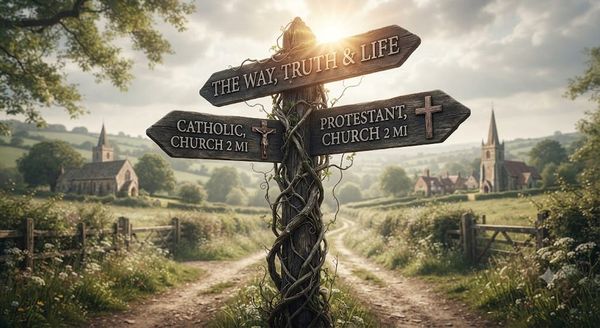
Christianity makes a claim that does not leave room for a shrug. Jesus said the only way to the Father (of all creation) is through Him. Not a way among many, but THE ONLY WAY. A statement like that cannot be filed under "nice idea," It is either the most important thing ever said or it is a lie, and either way it asks for deep reflection from anyone who hears it.
That is uncomfortable on purpose. If the claim is true, there are really only a handful of honest ways to respond to it:
- You accept that it is true, that following Him is the only true faith, and you submit to it completely.
- You accept that it is true but hold parts of yourself back, believing to a degree while quietly refusing to surrender the rest (which puts you at risk of being spit out i.e. Revelation 3:16).
- You decide it is made up, or you stay unsure, and so you set it aside and move on (which if you're wrong, you will be condemned John 3:18).
- You recognize that it is true, and you rebel against it anyway.
Most people live in one of the middle two, and that is the most precarious place to stand, because a claim this size will not sit politely in the background because eventually... it's gonna require an answer.
The thing no other system can fix
Part of why I find it impossible to ignore is that Christianity is the only thing I have found that deals honestly with human ego/pride, which is arguably the root of everything that goes wrong in us. To accept Christ's sacrifice, you first have to admit you could never earn your way to worthiness, that you have failed badly and need rescuing (which is an initial direct shot to everyone's ego).
In the same breath you have to accept that the grace extended to you is extended to everyone else who turns from their wrongs too, including the people you would rather watch get what they deserve. It humbles you twice. No self-help framework asks that of you, because none of them could survive it.
The deepest reason runs underneath even that. Every moral or religious system I know of leans one of two ways. Some are justice-only: karma, retribution, cause and effect, where you get exactly what you earn. Others are mercy-only: a vague, blanket forgiveness with no real accountability. Christianity refuses both.
It insists that mercy and justice meet in the same place, at the cross, where God Himself steps into our place. Psalm 85:10 pictures the moment: "Mercy and truth have met together; righteousness and peace have kissed." The justice we earned is served, and the mercy we could never earn is given, because God closed the gap through His Son.
That raises a fair question. Why does mercy need justice at all? Is it only "because God said so," or is there something deeper holding it together? I think there is, and it shows up biblically, philosophically, and in plain human experience.
Why mercy needs justice
Strip it down and the logic is hard to escape. Mercy without justice collapses into sentimentality. If wrong is simply let go, evil is treated as though it never mattered. Forgiving murder with no justice says the victim's life did not count. Forgiving abuse with no reckoning quietly tells the wounded that their dignity was negotiable. It can feel kind, but it leaves the world unjust.
Justice without mercy is the opposite failure. If we only ever receive exactly what we deserve, none of us survives it. Psalm 130:3 asks who could stand if God kept a record of sins. Pure justice is a cold machine. It honors the law and destroys the relationship.
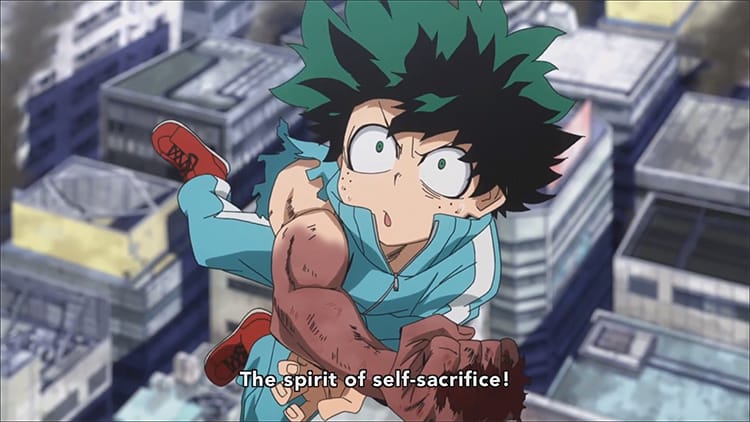
Put the two together and you finally get something that looks like real love. Love wants accountability, so that we grow and evil is taken seriously, and it wants forgiveness, so that we are not destroyed every time we fail. Justice protects what is good. Mercy restores what is broken. Remove either one and neither people nor relationships can flourish. The only way to have both though, is with self sacrifice...
Biblically, It's God's nature, not an arbitrary rule
When God describes Himself in Exodus 34:6-7, He is "merciful and gracious, forgiving iniquity," and yet He "will by no means clear the guilty." That is not God inventing a tension to make life difficult. It is a description of who He is. Mercy with no justice would deny His holiness. Justice with no mercy would deny His love. Both are fully true of Him at once. Paul says the same of the cross in Romans 3:25-26: God presented Christ so that He could be "just and the justifier of the one who has faith." If God simply waved sin away without justice being satisfied, He would stop being just. The cross is how He remains both.
You already know this is true
We see this everywhere, even outside of faith. Mercy handed to everyone with no accountability does not resolve anger, it lets resentment spiral. Justice applied with no mercy reads the letter of the law and never weighs a person's circumstances or their genuine remorse, treating every situation as cookie-cutter. A good father shows the balance instinctively. Psalm 103:13-14 says He "remembers that we are dust," and Hebrews 12:6 says He "disciplines the one He loves." He does not crush a child for every mistake, and he does not ignore the need for correction either. Growth has always taken both, patience and correction, mercy and justice.
The cross is not Plan B
This is why the cross is not a backup plan God reached for when things went sideways. It is the one place where His justice and His mercy fully meet. Justice is satisfied, because sin is genuinely judged rather than swept under the rug. Mercy is poured out, because the judgment falls on Christ instead of on us. As the one true Son of God, who obediently submitted to his death as a measure of self sacrifice out of love for every person on earth.
This is not something trivial or to take lightly as he wasn't simply beheaded. He had his skin removed nearly entirely by flogging, he wore a "crown of thorns" (which was really a helmet of effectively railroad spikes piercing his skull), he was stripped naked and suffocated to death on the cross and then was bled out. This was no parent running in front of a bus situation, this was willingly accepting the worst kind of torture until death for all of our sake to be reconciled to God despite the sins we have committed throughout our lives.
That is what sets the Christian story apart from every other. It takes evil completely seriously and it loves completely, in the same act, at the same moment.
If it is true, nothing stays the same
Sit with what follows if Jesus really died, really rose, and His claims are true. Every other path is a counterfeit. Heaven and hell are not metaphors. The spiritual realm is real. And we finally have a real answer to the pride that drives so much of our brokenness.
It also means ignoring the offer is not neutral. If you set it down without ever seriously weighing it, you will likely keep drifting between world-views, never quite filling the space in you that nothing else seems to fit, and one day, when this life ends, you will have to face the truth of what was freely offered and quietly refused. So the claim has to be taken with complete seriousness. It deserves to be read closely, meditated on, prayed over, and tested for truth. Dismissing it without ever examining it is a gamble, with this life and with eternity, and not only your own.
The best news there is
Here is the part that catches people off guard. If it is true, it is the best news anyone has ever heard. Everything is forgiven, as a free gift, paid for by His sacrifice. It does ask for a real inward change though and this is what criticizers often miss.
If you really recognize where your life was headed, what Jesus went through and what God did to save you...you have to have an honest reckoning with your own guilt, because grace is given to those who come to the end of themselves and turn. Jesus described what He offers like this: "My yoke is easy, and My burden is light" (Matthew 11:30). Life does not become magically perfect, but it takes on a weight and a meaning it never had, and you gain the thing most people ache for without ever naming it, a direct and present relationship with the God who made you.
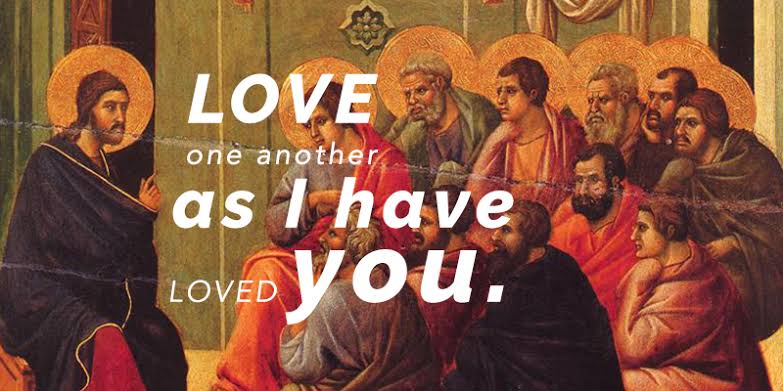
It should also change how you treat people (though admittedly many "Christians" remain hard hearted towards others because they do not fully know Christ). Knowing Christ suffered for my sins AND for the sins of the person I am angry with levels the ground between us. It causes me to be slower to anger and more open to offer the second chance I was handed. It frees me to grieve what I have done, which underneath everything I think we all know we need to do. Really following Christ means inwardly changing and becoming obedient to what is asked of us... to love one another.
To be clear, this article is not meant to convince you to believe, but to open you're heart to consider it at least (whether for the first time ever, or as someone returning to the faith). I will end the way I would pray for anyone reading this. I pray that as you sit with these words, He reveals Himself to you the way His Spirit revealed Him to me, and that you come to believe too. Please do not put it off. None of us knows which day is our last, and there is no reason to spend another one without the greatest gift there is, a real relationship with a loving Creator who is ready to meet you in the middle of your mess and walk you through every hard thing in it.